

A single-edge (SE) razor holds a blade with one cutting edge; a double-edge (DE) razor holds a flat blade with two cutting edges and flips over to a fresh side. Both cut with a single edge against the skin, so both count as single-blade razors — the split people actually care about is blade shape, price, and how easy the blades are to find. The single-blade razor guide covers the category; this page pins down the SE/DE difference and points most first-time buyers to the right one.
TL;DR — SE vs DE in one paragraph
A single-edge razor has one cutting edge; a double-edge razor uses a flat blade with two and flips for a fresh one. Most people searching for a “single-blade razor” want a DE: DE blades are a shared standard at 10 to 15 cents in 100-count packs, while SE blades cost more from fewer makers. Both last 5 to 7 shaves, the cadence the American Academy of Dermatology recommends. ORMIXA makes a DE razor, the Vector, not an SE.
What is a single-edge razor?
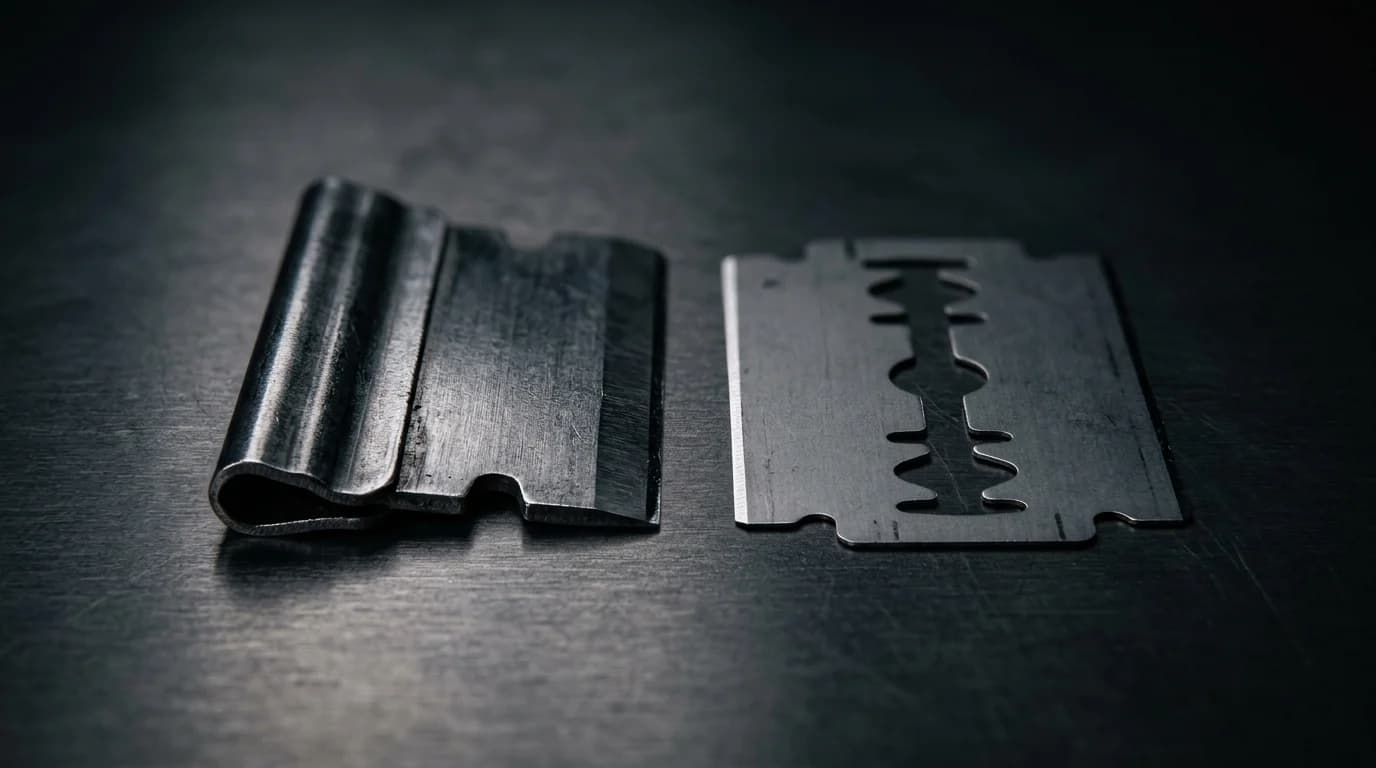
A single-edge razor is a wet-shaving tool that clamps a blade with one sharpened edge, typically much stiffer and thicker than a double-edge blade. The two common formats are the GEM-style single-edge, which uses a rigid blade with a spine, and the injector, which loads a thin blade from a cartridge-style magazine so the used blade pushes the fresh one into place without handling the edge. Both designs present one edge to the skin at a fixed angle, and the rigid blade tends to feel planted and stable through a pass.
The trade-off shows up when the blade wears out. A single-edge blade has one edge, so it retires when that edge dulls — there is no second side to flip to. The blades are also made by far fewer manufacturers than DE blades, so the choice of brands is narrow and the price per blade runs higher. For a modern buyer, finding SE blades usually means ordering online rather than picking them up at a drugstore.
What is a double-edge razor?
A double-edge razor clamps a single flat blade sharpened on both long sides between a top cap and a base plate, exposing one edge to the skin at a time. When the first edge dulls, you unscrew the head, rotate the blade, and shave on the second edge, which is why one blade lasts longer than its single edge would suggest. The head’s geometry — the blade gap and blade exposure ground into the base plate — sets how aggressive the shave feels. The ORMIXA Vector, for example, runs a 0.76 mm blade gap and 0.14 mm blade exposure in the mild-to-moderate range, in a machined body offered in TC4 titanium (60 g) and 316L stainless (104 g). It is a double-edge razor; ORMIXA does not make a single-edge model.
The double-edge format is the one most people picture when they hear “safety razor,” and it is the reason most single-blade searches end at a DE. The flat DE blade is a near-universal standard, so dozens of brands make interchangeable blades and any DE razor takes any DE blade. That breadth of supply is the practical advantage the format holds over single-edge.
How do SE and DE blades differ in cost and availability?
Double-edge blades are cheaper and easier to find than single-edge blades, and by a wide margin. A DE blade runs about 10 to 15 cents in 100-count packs, and because the blade is a shared standard, the same razor can sample many brands. Single-edge blades come from a short list of manufacturers, sell in smaller quantities, and cost several times more per blade, so the running cost and the shopping both favor DE. Which DE blade suits your face is its own question, and it is why every Vector ships with a LEDGER blade assembly — five DE blades from different brands, so the first week is a sampler instead of a guess.
The two formats are not interchangeable. A single-edge blade will not fit a double-edge razor and vice versa — the blade shape, thickness, and mounting are different systems. Choosing SE or DE is therefore a commitment to that blade supply, which is another reason the broad, cheap DE blade market makes DE the lower-friction starting point. Both blade types should be swapped on a similar schedule: the American Academy of Dermatology advises changing a blade after five to seven shaves to keep it sharp and limit irritation, and that holds whether the edge is on an SE or a DE.
Which has the steeper learning curve?
Both SE and DE ask for the same core technique, so neither is dramatically harder to learn than the other. Single-blade shaving of either kind means setting the blade angle yourself, letting the razor’s weight set the pressure instead of pressing down, and taking the first pass with the direction the hair grows. Cleveland Clinic and the American Academy of Dermatology both frame the same habits for a comfortable shave: light, short strokes, shaving with the grain, and not going over the same patch repeatedly. Those habits carry across both formats.
The one honest difference is feel. A rigid single-edge blade sits very stable and some shavers find that reassuring, while a DE blade is thin and flexes slightly, which rewards a settled angle. Neither is beginner-proof, and neither is out of reach. For a first single-blade razor, the deciding factor is usually the blade market rather than the motion — and that points to DE. The full technique is covered in the step-by-step safety-razor guide.
Who suits single-edge, and who suits double-edge?
Double-edge suits most people, and especially anyone buying their first single-blade razor. The cheap, everywhere-available blades let a beginner try several brands to find one their skin likes without much outlay, and the format is what nearly every “safety razor” guide and starter kit is built around. If the search that brought you here was “single-blade razor,” a DE is almost certainly what you were picturing.
Single-edge appeals to a narrower group: shavers who specifically like the planted feel of a rigid blade, or who prefer the hands-off blade change of an injector, and who do not mind ordering blades from a short list of sources at a higher price. It is a valid choice, not a lesser one — it is just the less common and less flexible starting point. For deciding between specific mild and aggressive heads once you have settled on DE, the how-to-choose guide walks through what to look for.
Sources
- American Academy of Dermatology — Hair removal: how to shave (change the blade every 5–7 shaves; shave with the grain, use light strokes)
- American Academy of Dermatology — Razor bump remedies (a single-blade razor is often recommended; avoid pressure and shave slowly with the grain)
- Cleveland Clinic — Razor burn (keep the blade sharp, shave in the direction of hair growth, use light short strokes, do not go over the same section twice, replace after 5–7 uses)
Disclosure
ORMIXA products are sold by ECE Innovate Homes LLC and manufactured by Guangzhou Yanyang Technology Co., Ltd. under trademark license.
Frequently asked questions
- What is a single-edge razor?
- A single-edge razor holds a blade with one sharpened edge, usually stiffer and thicker than a double-edge blade. The two common types are the GEM-style single-edge, which uses a rigid spined blade, and the injector, which loads a thin blade from a magazine. One edge meets the skin at a fixed angle, and the blade retires once that single edge dulls.
- Is a double-edge razor better than a single-edge?
- Neither is universally better; they suit different shavers. Double-edge is the more practical starting point because DE blades are a shared standard sold everywhere for 10 to 15 cents each, so any DE razor takes any DE blade and you can sample many brands cheaply. Single-edge feels more planted and stable to some shavers, but the blades come from fewer makers at a higher price.
- Can you put a single-edge blade in a double-edge razor?
- No, and the reverse does not work either. A GEM-style single-edge blade is thick and carries a folded steel spine, an injector blade is a different width again, and a double-edge blade is a thin flat rectangle with a slotted center. The clamping surfaces and the mounting holes are different on each, so picking SE or DE commits you to that blade supply for the life of the razor.
- Which is better for beginners, single-edge or double-edge?
- Double-edge is the easier first single-blade razor for most people, mainly because of the blades. Cheap, widely available DE blades let a beginner try several brands to find one their skin likes without much cost. The shaving technique is nearly identical for both formats — set the angle yourself, let the razor’s weight do the work, and shave with the grain.
- Why do single-edge blades cost more than double-edge blades?
- Volume and competition. Double-edge blades are a shared standard made by dozens of manufacturers, which pushes 100-count packs down to roughly 10 to 15 cents per blade. Single-edge blades come from a short list of makers, sell in smaller pack sizes, and use more steel per blade, so the cost per shave runs several times higher. ORMIXA makes a double-edge razor, the Vector — it does not make a single-edge razor, and it does not sell blades separately, though every Vector order includes a LEDGER blade assembly of five DE blades from different brands.