

Choosing a safety razor starts with your budget, preferred weight, and willingness to learn blade angle and pressure. We manufacture the ORMIXA Vector. This guide explains the choices behind it and gives you questions to ask when comparing razors; it is not an independent market ranking.
Start with your priorities
Compare material, weight, and head geometry alongside the total purchase cost. Published specifications help you compare designs; they do not by themselves prove machining quality or predict your shave. The ORMIXA Vector uses 316L or TC4, CNC machining, a 0.76 mm gap, and 0.14 mm exposure.
- Budget: include the razor, replacement blades, and any accessories you actually need. Check delivery and return terms before paying.
- Weight: Vector 316L is 104 g; TC4 is 60 g. Choose the handling weight you prefer, rather than treating a lighter or heavier razor as automatically better.
- Geometry: compare gap, exposure, and guard together. A gap number alone is not a cross-brand aggression scale.
- Maintenance: check cleaning instructions and whether a finish or coating needs extra care. Rinse and dry the razor after use.
- Learning: a DE razor requires angle and pressure control. Start with short strokes and allow time to learn the tool before judging a blade pairing.
What determines razor quality — a safety razor buying guide
Material, machining precision, and head geometry help explain how a razor is built. This safety razor buying guide walks through each, using the Vector as our own example. Personal fit still depends on your beard, technique, and the blade you load.
Wondering how to choose a safety razor without getting lost in marketing claims? Use the structure below: material first, machining second, geometry third.
Material
Common materials involve different cost, weight, and care choices:
- Zamak (zinc alloy) — commonly cast and plated. Check the finish and care instructions, especially if the coating is damaged. Price alone does not tell you how long a razor will last.
- Brass — may be sold bare or plated. Check the actual product weight and the maker’s finish-care guidance.
- Stainless steel (304/316L) — no plating needed on the Vector. Rinse and dry after use. The ORMIXA Vector 316L sits here at $119.
- Titanium (Grade 5 TC4 / Grade 2 TA2) — check the specified grade and complete razor weight. The Vector TC4 is 60 g compared with 104 g for the 316L. The Vector TC4 is $189, shipped direct from our Guangzhou facility — manufacturer to door.
The titanium vs stainless steel razor decision usually comes down to weight preference and budget. On the Vector, both materials use the same head geometry. We have not established that either material gives every user a closer or more comfortable shave. Grade-5 titanium’s ~4.4 g/cm³ density and corrosion behavior are documented in Ti-6Al-4V material references and peer-reviewed 316L-vs-Ti6Al4V corrosion studies.
Machining — cnc vs die cast razor explained
CNC machining removes material from stock; die-casting forms a part in a mold. Cast parts can also receive machining afterward. Ask which process is used for the head and blade seat, rather than inferring it from price or a general CNC claim.
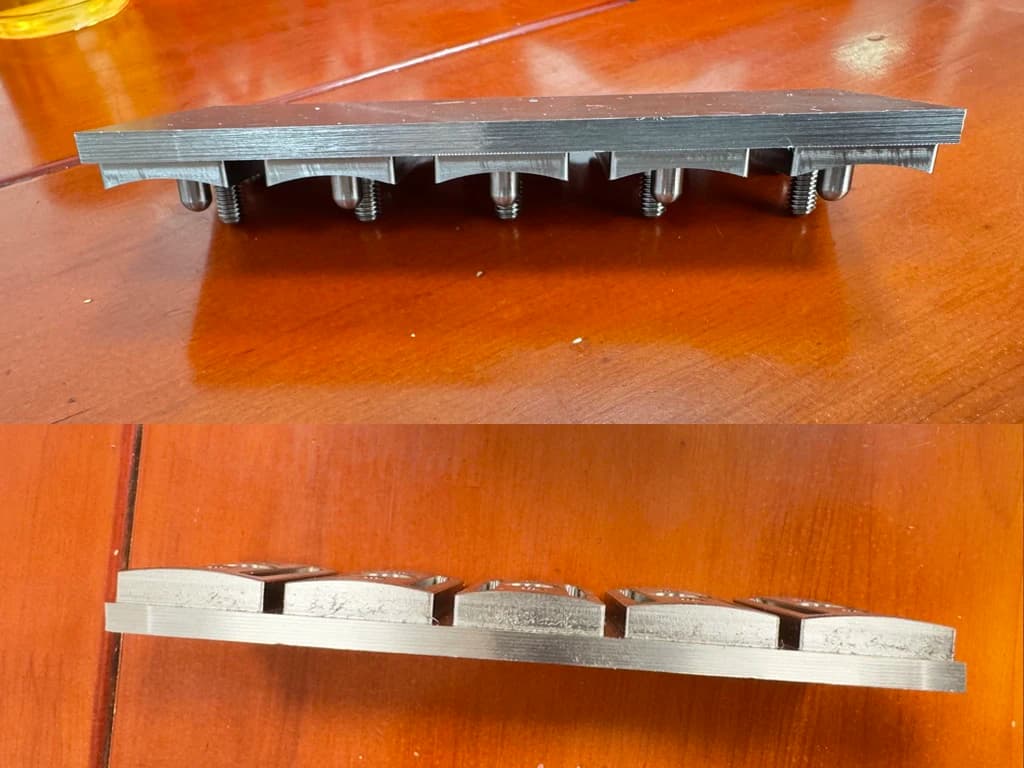
Manufacturing method alone does not establish the finished part’s tolerance. That requires a drawing, measurement method, and inspection evidence. The photo below shows Vector heads during machining; it is process evidence, not a measurement report.
Head geometry
Read blade gap, exposure, guard, and blade support as a system. These describe the head; the blade you load and your technique also affect the shave.
Blade gap describes the opening between the blade and guard. It is distinct from exposure. The Vector has a 0.76 mm gap; that number alone cannot rank it against another razor.
Blade exposure describes the blade edge’s position relative to the plane between the cap and guard. The Vector’s exposure is 0.14 mm.
Guard type describes the surface in front of the blade: a continuous safety bar on a closed comb, or spaced teeth on an open comb. The Vector uses a closed comb. Neither guard label on its own guarantees a mild or aggressive shave.
If gap, exposure, or guard type is missing, ask the maker for the specifications. Missing numbers leave a comparison gap; they do not establish that the maker cannot control its machining.
Why direct-to-consumer matters
A typical safety razor reaches the customer through several layers: the factory that machines it, a brand-licence holder, a regional distributor, and the retailer. Each layer earns a margin, and the marketing budget sits on top of all of them. We will not publish a breakdown for other brands — we do not have their numbers.
What we can document is our own structure. The Vector TC4 is priced at $189 because its cost stack covers materials, machining at our Guangzhou facility, international shipping, and a single operating margin. Current configuration prices are shown on the product page.
What to look for when buying
- Check the alloy. If the grade is not named, ask the maker. Do not infer material from the price or appearance.
- Check the weight. A razor that weighs 30–50g is likely zamak or thin aluminum. Stainless steel razors typically weigh 80–110g. Titanium is 50–70g.
- Read the geometry together. Check blade gap, exposure, guard, and the maker’s intended use. A published dimension is a design specification, not a quality inspection.
- Skip the brand story. Heritage, hand-polished, made in [country] — none of these tell you what the metal is or how tight the tolerances are. The spec sheet matters. Look for the alloy grade and the tolerance.
Where ORMIXA fits
We make the Vector, so we are biased, and we will say so plainly. But here is what we can substantiate:
- 316L stainless steel or TC4 titanium — grades disclosed
- CNC machined from solid bar stock
- 0.76 mm blade gap, published, measurable
- No logo on the razor — the price covers the metal and the machining
- Every order includes a LEDGER 5-blade sampler so you can find the right blade for this specific head geometry. Our Vector blade pairing tests document those pairings in detail
Use those facts to decide whether the Vector fits your budget and handling preferences. For any razor you consider, check the complete specification, care instructions, delivery terms, and return policy.
Sources
- AZoM — Ti-6Al-4V (Grade 5) titanium datasheet: ~4.42 g/cm³ density & tensile strength
- AZoM — Grade 316/316L stainless steel: corrosion resistance without plating
- American Academy of Dermatology — How to Shave: technique to prevent razor bumps & burns
- Cleveland Clinic — Razor Burn: blade, hair & skin interaction
Disclosure
Internal lab content. Not sponsored. ORMIXA does not receive commercial consideration from any razor brand for inclusion or comparison in this guide. The competitor categories described (zamak / brass / stainless / titanium) are market observations across publicly available product pages, not paid placements.
ORMIXA products are sold by ECE Innovate Homes LLC and manufactured by Guangzhou Yanyang Technology Co., Ltd. under trademark license.
Frequently asked questions
- Which safety razor material is best for beginners?
- There is no universal best material. Start with your budget, preferred weight, and care requirements. Vector 316L weighs 104 g and TC4 weighs 60 g; both use the same head geometry and standard DE blades. Learning angle and pressure matters with either version.
- Titanium vs stainless steel safety razor — which is better?
- On the Vector, the main buying differences are material, weight, and price. TC4 is 60 g and 316L is 104 g. Shared geometry does not prove identical comfort or performance for every user; choose by your handling preference and budget.
- What blade gap should I look for in a safety razor?
- Read gap alongside exposure, guard, and blade support. A gap number alone is not a cross-brand aggression scale. Vector uses a 0.76 mm gap, 0.14 mm exposure, and closed comb. We describe its design as mild-to-moderate; your blade, angle, and pressure also affect the shave.
- Are CNC-machined razors worth the price?
- Check what is machined, the material, and the inspection evidence. CNC describes a manufacturing process, not a guaranteed tolerance or shave result. Decide whether the complete product and care requirements fit your needs and budget.
- How long should a safety razor last?
- There is no lifespan guaranteed by material alone. Construction, finish, care, and accidental damage matter. Follow the maker’s cleaning instructions, inspect the head and threads, and check warranty and replacement-part terms before buying.
- Open comb or closed comb — which safety razor is better?
- A closed comb uses a continuous safety bar; an open comb uses spaced teeth. Neither label alone determines aggression or comfort. Read the complete head geometry and intended use. The Vector uses a closed comb.