

Which double-edge blade should you try in an ORMIXA Vector? This database records our own pairing tests, with the actual razor material and shave sessions identified per entry. Results describe the tested pairing and conditions, not a universal ranking of blades.
The Vector double-edge safety razor used in this database is manufactured by Guangzhou Yanyang Technology Co., Ltd. (the ORMIXA trademark owner) and sold under license by ECE Innovate Homes LLC. We are systematically testing every double-edge blade we can get our hands on — multiple shaves each, scored on a fixed rubric, with video evidence per session. This page is the live database.
- Already own a Vector? Browse blade pairings and check the tested material.
- Choosing a Vector? Compare 316L and TC4 specifications, prices, and available configurations.
Early stage: This database currently has 12 completed pairing tests (Astra Superior Platinum, Personna Stainless Steel, Gillette Perma-Sharp, Iridium Super, Dorco Prime Platinum, Feather Hi-Stainless, Gillette Nacet, Gillette Silver Blue, Derby Extra, Voskhod, Wilkinson Sword Saloon Pack, Wilkinson Sword Classic). Cycle per pairing: 1–2 weeks of shaving (3 scored shaves at a ~72-hour target spacing; actual hours are logged per session) plus write-up and review — new pairings have landed on a roughly 2-3 week cadence. Bookmark this page — it is updated on a rolling basis.
TL;DR — Current Pairing Database
Based on pairing tests completed as of 2026-09-05:
| Rank | Pairing | Score | Best window |
|---|---|---|---|
| 1 | Vector 316L × Astra Superior Platinum | 46.0/50 (3-shave avg) | Shaves 1–3 (zero decay) |
| 2 | Vector 316L × Personna Stainless Steel | 46.0/50 (3-shave avg) | Shaves 1–3 (no comfort break) |
| 3 | Vector 316L × Gillette Perma-Sharp | 46.0/50 (3-shave avg) | Shaves 1–3 (mild S3 edge feedback) |
| 4 | Vector 316L × Iridium Super | 45.7/50 (3-shave avg) | Shaves 1–2 (both 46/50; S3 confounded by 96h interval) |
| 5 | Vector 316L × Dorco Prime Platinum | 44.3/50 (3-shave avg) | Shaves 1–3 (zero nicks, all weepers on WTG) |
| 6 | Vector 316L × Feather Hi-Stainless | 44.0/50 (3-shave avg) | Shaves 1–3 (no axis moved) |
| 7 | Vector 316L × Gillette Nacet | 42.7/50 (3-shave avg) | Shaves 1–2 (Shave 3 clean, mild dip) |
| 8 | Vector 316L × Gillette Silver Blue | 42.7/50 (3-shave avg) | Shaves 1–2 (Shave 3 at adapter edge) |
| 9 | Vector 316L × Derby Extra | 42.0/50 (3-shave avg) | Shaves 1–2 (Shave 3 usable, window narrowing) |
| 10 | Vector TC4 × Voskhod Teflon Coated | 40.0/50 (3-shave avg) | Shave 1 (S2 dip, partial S3 recovery) |
| 11 | Vector 316L × Wilkinson Sword Classic | 35.7/50 (3-shave avg) | Shaves 1–2 (Shave 3 past window) |
| 12 | Vector 316L × Wilkinson Sword Saloon Pack | 35.3/50 (3-shave avg) | Shaves 1–2 (Shave 3 past window) |
| 13+ | Currently testing (W13–W18) | — | — see queue below |
Updated as each pairing clears the test cycle (typically every 2–3 weeks). 6 more blades scheduled (W13–W18), bringing the first batch to 18: Treet Platinum, Gillette Platinum in both its Russian and Chinese packs, Shark Super Stainless, Derby Premium and BIC Chrome Platinum.
Read the Vector 316L × Astra Superior Platinum pairing data →
Read the Vector 316L × Personna Stainless Steel pairing data →
Read the Vector 316L × Gillette Perma-Sharp pairing data →
Read the Vector 316L × Iridium Super pairing data →
Read the Vector 316L × Dorco Prime Platinum pairing data →
Read the Vector 316L × Feather Hi-Stainless pairing data →
Read the Vector 316L × Gillette Nacet pairing data →
Read the Vector 316L × Gillette Silver Blue pairing data →
Read the Vector TC4 × Voskhod Teflon Coated pairing data →
Read the Vector 316L × Wilkinson Sword Classic pairing data →
Read the Vector 316L × Wilkinson Sword Saloon Pack pairing data →
Read the Vector 316L × Derby Extra pairing data →
Why We’re Doing This
Three reasons.
First, the Vector is our razor — manufactured for ORMIXA by Guangzhou Yanyang Technology, tested on our own bench. We should know — concretely, with data — how the razor performs across the full range of DE blades a customer might mount in it. “I tried Astras once and they’re fine” isn’t enough. This project forces deliberate, scored use across every major mass-market blade on the same razor platform — the Vector, with the material variant logged per test.
Second, buyers keep asking. Which blade with this razor? is the single most common question aimed at any razor maker — all over r/wicked_edge, retailer Q&A, and our own inbox. Until now the honest answer was “try a sample pack.” A documented database — fixed rubric, video evidence, first-party testing disclosure — is a better answer than passing the buck.
Third, calibration. The interaction between a blade’s coating, its edge angle, and the Vector’s cap/baseplate geometry only shows up after multiple blades have run through the same head. Each tested blade sharpens our read on what the geometry is actually doing — input for the next razor we manufacture.
A Note on the Razor Used
Every test in this database is conducted on the ORMIXA Vector razor. The Vector ships in two material versions:
- Vector 316L — 316L stainless steel (precision-machined)
- Vector TC4 — TC4 titanium alloy
Current pricing is on the Vector product page. Both versions share the same blade gap (0.76 mm) and head geometry. The 316L razor weighs 104 g and the TC4 razor weighs 60 g.
A score belongs to the material variant actually tested. Shared geometry does not establish identical comfort or ranking on both materials. Weight, handling, blade, and session conditions can affect the experience. Read the material label and session record before using a pairing as a starting point for your own trials.
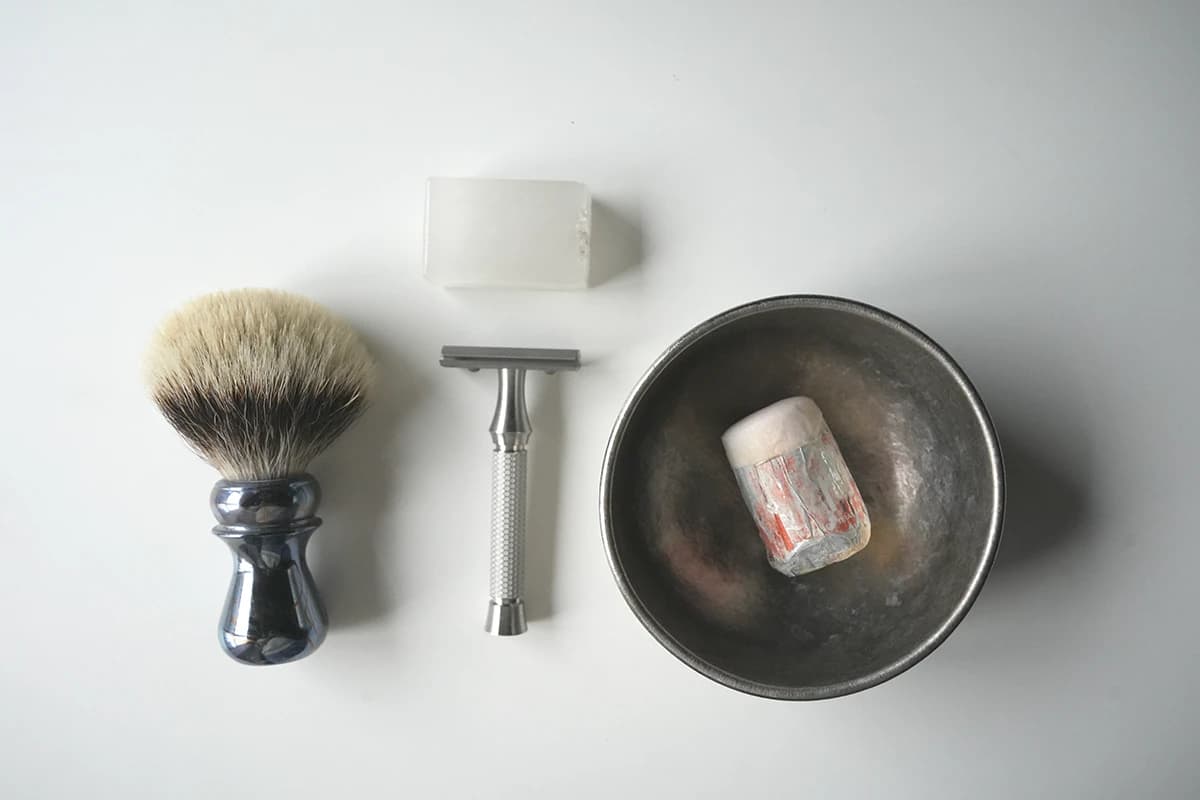
Mild DE razor specifications — the 0.76mm blade gap razor profile
The Vector uses a 0.76 mm blade gap and closed comb. Read gap, exposure, angle, and guard together; one dimension cannot establish a cross-brand aggression ranking. Full specifications:
| Parameter | Value |
|---|---|
| Blade gap | 0.76 mm |
| Blade exposure | 0.14 mm |
| Blade angle | 32° |
| Guard type | Closed comb |
| Guard span | 1.84 mm |
| Aggression | Mild-to-moderate (0.76 mm gap / 0.14 mm exposure) |
| Grip | Raised honeycomb grip (etched from the metal) |
| Finish | Bead-blasted matte |
We describe the Vector as mild-to-moderate. This is a qualitative description of our design, not a measured rating that can be compared directly with another razor. Blade choice, angle, and pressure also affect how it shaves.
Scores are specific to the tested material and sessions — see Razor Note above.
DE Blade Compatibility Test Methodology
Variables we control
- Razor: ORMIXA Vector — TC4 or 316L variant, logged per test (shared head geometry). Specifications:
- Blade gap: 0.76 mm
- Blade exposure: 0.14 mm
- Blade angle: 32°
- Guard: closed comb, 1.84 mm span
- Aggression: mild-to-moderate — daily-driver territory rather than aggressive open-comb
- Pass pattern: WTG → ATG (2-pass). See “Why 2-pass instead of 3-pass” below for rationale.
- Pressure: minimal — let the razor’s weight do the cutting.
Why 2-pass instead of 3-pass
Every test runs a 2-pass routine (WTG → ATG). We do not include an XTG transition pass.
In testing on the Vector platform, XTG adds marginal closeness benefit but increases irritation likelihood. The 2-pass routine matches our actual daily shaving habit, and consistency across all 13 cluster compatibility tests matters more than adopting a “theoretical standard” we don’t actually use.
Note: 2-pass on a 0.76mm blade gap mild razor still achieves SS-to-DFS levels for most blade/skin combinations. BBS targets require XTG, which is outside this test’s scope.
Pre-shave routine (default protocol)
- Cold water splash for 5 seconds (no warm soak)
- ARKO shaving stick applied directly to face
- Lather with TA2 Titanium Line 26mm two-band badger brush (cold water)
- No pre-shave oil, no warm towel, no cream
Why this matters: the default is pinned so blade behavior dominates the result. Where a session ran a different soap or brush, the entry’s session cards and Methodology Notes say so — deviations are disclosed per entry, never hidden. Your routine may differ — adjust your interpretation accordingly.
Post-shave routine
- Cold water rinse
- Alum block applied (consistent across all tests)
- Sting/heat sensation noted as part of irritation scoring
Alum block is part of SOP because it’s part of our actual routine and gives a quick weeper detection signal — visible sting on micro-cuts you didn’t notice during the shave. Without it, irritation data would be less precise.
Variables we document but can’t control
- Beard growth at each shave: the target is 72 hours since last shave from Shave 2 onward, with Shave 1 on a longer baseline. Real life intervenes — actual hours have ranged roughly 72–146h and every session’s true interval is logged on its entry’s session cards and Methodology Notes.
- Skin condition: any visible irritation / dryness from prior shave
- Use number: shave 1, 2, or 3 of 3 for that blade
- Room temperature & humidity (logged from a shelf hygrometer)
Scoring Rubric
Each dimension is scored 1–10 per session. The blade’s per-session total is the sum across the five dimensions; final score is the average across the 3-shave cycle. Maximum: 50 points per shave.
Scoring notes. Scores are our contemporaneous in-session calls, anchored to the bands below but not computed from them — a session’s number weighs where the blood points landed, the alum reaction, and how the skin read afterward, and the session notes always carry that context. Scores are never adjusted retroactively; where an entry’s call reads lenient or strict against the band text, its Methodology Notes say so. Read the numbers together with the notes.
Closeness (1-10)
- 10/10: True BBS, 48+ hours before re-shave needed
- 9/10: BBS, 4-6 hour peak window
- 8/10: DFS+ (very close, mild stubble in 12-18h)
- 7/10: SS (Socially Smooth) — what most people consider “well-shaved”
- 6/10: Mild stubble visible to touch
- 5/10: Clearly under-shaved
- 1-4: Failed shave
Smoothness (1-10) — drag/glide during the shave
- 10/10: Glass-on-glass, blade fully invisible to face
- 9/10: Effortless, no perceptible drag
- 8/10: Smooth with occasional micro-drag in difficult areas
- 7/10: Noticeable drag in 1-2 spots
- 6/10: Persistent drag requiring re-lather
- 5/10 or below: Painful pulling
Irritation (10 = zero irritation)
- 10/10: Zero weepers, zero alum sting, zero sensation
- 9/10: Zero weepers, light alum sensation only
- 8/10: 1 weeper OR mild post-shave tightness
- 7/10: 1-2 weepers OR alum heat sensation (warm not burning)
- 6/10: Razor burn within 2 hours
- 5/10 or below: Significant nicks, persistent burn
Audible feedback (1-10) — sound of blade vs hair
- 10/10: Crisp, satisfying click-cut
- 9/10: Clear cutting sound, no scraping
- 8/10: Mostly clean, occasional scrape
- 7/10: Mixed clean cut + drag sound
- 6/10 or below: Mostly scraping, blade not engaging
Lather compatibility (1-10)
- 10/10: Blade and lather work together, zero interference
- 9/10: Excellent, no clogging
- 8/10: Good, occasional rinse needed
- 7/10: Workable but blade clogs
- 6/10 or below: Lather/blade fight
Total: out of 50
(Longevity is captured in the Test Period Summary table’s “Fresh / Peak / Late” rows rather than as a single dimension — degradation shape over the 3-shave run is more informative than a one-number longevity grade.)
What we deliberately don’t score
- “Premium feel” — too biased.
- Packaging — irrelevant to the shave.
- Brand prestige — the entire point is to ignore this.
Test process
- New blade installed. Baseline shave on 1-week stubble (Shave 1, recorded).
- Same blade used for exactly 3 consecutive shaves. Shaves 2 and 3 are spaced 72 hours apart. This covers the full performance arc:
- Shave 1 (fresh): coating breaks in, baseline cutting power read on 1-week stubble.
- Shave 2 (peak, +72h from Shave 1): community reports and our own testing both point to this as where most blades hit their best performance window.
- Shave 3 (late, +72h from Shave 2): degradation signals, when most experienced wet shavers swap blades.
- Score recorded immediately, before reading prior session notes.
- Final score = average of all 3 sessions (out of 50 per shave).
Why exactly 3 shaves with 72-hour spacing?
- Sample size discipline: 3 is the minimum to capture a degradation curve (start / peak / decline). 2 isn’t enough; 4+ provides diminishing marginal data. Vendor claims of “5-7 max use” overstate real-world replacement habit (community polls skew toward replacing at 3-5).
- 72-hour spacing: at 72h the stubble has reached a 3-day length (roughly 0.5–4 mm) — long enough to reveal a blade’s true cutting character, short enough that hair density remains within a daily-shave reviewer’s frame of reference. 24-48h growth is too forgiving (most blades feel similar). 96h+ growth is too long (different mechanics — closer to beard-trimming territory).
- Skin recovery: 72h between sessions allows complete recovery from any micro-irritation. Faster cadence accumulates skin trauma that confounds blade-attributable scoring.
- Real-world relevance: “every 2-3 days” is one of the most common DE shaving cadences (per B&B forum threads), so testing at 72h matches actual user behavior — not artificially-easy 24h baby-stubble conditions some review sites use.
- House prerogative: it is our razor and our test bench, so we set the testing condition that exposes the most performance differences. 72h is the stress test.
Data Source Note
The methodology above isn’t pulled from thin air — it draws on community consensus and published references where they exist:
- A 3-day beard runs roughly 0.5–4 mm — per the Gillette beard length guide.
- Skin recovery threshold and “best shaves at 2-4 days growth” reports — recurring threads on Badger & Blade and r/wicked_edge.
- Blade replacement habit polling — reader polls on Sharpologist and wet-shaving forums cluster around a 3-5 shave swap habit.
These references inform the test cadence (72h between sessions) and the test cycle length (3 shaves total). They do not dictate the scoring rubric — that’s calibrated against what actually moves a blade’s perceived pairing performance on the Vector variant recorded in each test.
Important Caveats
This database is maintained by a single ORMIXA tester. Results reflect:
- Test-team technique and pressure habits
- The tested Vector material variant — 316L or TC4, recorded per entry; blade gap 0.76 mm, exposure 0.14 mm, closed comb (see full spec table above)
Your experience with the same blades may differ. Treat this database as a starting point — a way to narrow down which sample packs are worth ordering — not as absolute rankings.
We genuinely welcome contradicting experiences in Reddit threads or by email. Counterexamples make the database better.
Disclosure
Internal lab testing. Not sponsored. ORMIXA does not receive commercial consideration from any DE blade vendor for inclusion, ranking, or review in this database.
Sources
- AZoM — Titanium Alloys Ti6Al4V (Grade 5) datasheet: density & elastic-modulus data for the TC4 alloy
- American Academy of Dermatology — How to Shave: technique & irritation-prevention guidance
- Cleveland Clinic — Razor Burn: cause of post-shave skin irritation
- ORMIXA blade-test shave logs — one skin profile, fixed rubric (methodology above)
ORMIXA products are sold by ECE Innovate Homes LLC and manufactured by Guangzhou Yanyang Technology Co., Ltd. under trademark license.
ORMIXA does not sell razor blades. Every blade tested in this project is purchased at retail, with our own money. None of the blade brands listed here have any commercial relationship to ORMIXA, ECE Innovate Homes LLC, or Guangzhou Yanyang Technology.
If you think the first-party testing framing biases the methodology, fair concern. Three countermeasures:
- Every session is recorded on video — full raw shave footage, not edited highlights. Videos are linked from each cluster pairing data point as they publish.
- Methodology is published before testing. Results are scored against the published rubric — no retroactive adjustment to favor specific blades.
- The current top-scoring pairing is not with a blade ORMIXA sells. If a Vector × Russian-factory-blade pairing scores higher than a Vector × premium-Japanese-blade pairing, that is what the database publishes.
Send your own data — we’ll compare.
Current Safety Razor Blade Comparison Database
Sorted by pairing score, descending. Click any row for the full pairing data.
| Pairing | Blade origin | Blade coating | Pairing score | Detail |
|---|---|---|---|---|
| Vector 316L × Astra Superior Platinum | Russia (Astra / P&G) | Platinum-coated | 46.0/50 (3-shave avg) | Read pairing data → |
| Vector 316L × Personna Stainless Steel | Germany (box-verified) | Box: Stainless Steel; blade stamp: Platinum Chrome | 46.0/50 (3-shave avg) | Read pairing data → |
| Vector 316L × Gillette Perma-Sharp | Russia (Gillette / P&G) | Stainless (box: Paslanmaz Çelik) | 46.0/50 (3-shave avg) | Read pairing data → |
| Vector 316L × Iridium Super | Russia (Petersburg Products International) | Stainless (box + blade stamp: EXTRA STAINLESS; no coating named) | 45.7/50 (3-shave avg) | Read pairing data → |
| Vector 316L × Dorco Prime Platinum | Vietnam (Dorco) | Stainless (box: stainless steel; line: Prime Platinum) | 44.3/50 (3-shave avg) | Read pairing data → |
| Vector 316L × Feather Hi-Stainless | Japan (blade-stamped) | Stainless (Hi-Stainless line) | 44.0/50 (3-shave avg) | Read pairing data → |
| Vector 316L × Gillette Nacet | Russia (Gillette / P&G) | Stainless | 42.7/50 (3-shave avg) | Read pairing data → |
| Vector 316L × Gillette Silver Blue | Russia (Gillette / P&G) | Stainless (coated) | 42.7/50 (3-shave avg) | Read pairing data → |
| Vector 316L × Derby Extra | Not established | Chromium-ceramic, platinum-tungsten and polymer coated (box text) | 42.0/50 (3-shave avg) | Read pairing data → |
| Vector TC4 × Voskhod Teflon Coated | Russia (Voskhod) | Teflon (PTFE) | 40.0/50 (3-shave avg) | Read pairing data → |
| Vector 316L × Wilkinson Sword Classic | Germany (Wilkinson Sword) | Stainless (uncoated) | 35.7/50 (3-shave avg) | Read pairing data → |
| Vector 316L × Wilkinson Sword Saloon Pack | India (Gillette India distribution) | Stainless (uncoated) | 35.3/50 (3-shave avg) | Read pairing data → |
Additional rows are added as cluster compatibility tests go live — see the Currently Testing Queue below for what’s in the pipeline.
Currently Testing Queue
Thirteen blades, 13 weeks. Each entry below has been purchased at retail and either tested or scheduled. Weeks correspond to the 72-hour-cadence cycle (3 shaves over 7 days = 1 week per blade, with overlap on writing weeks).
- W1 — Voskhod Teflon Coated (Russia) — compatibility test published 2026-05-03 → read the pairing data
- W2 — Wilkinson Sword Saloon Pack (India, Gillette India distribution) — compatibility test published 2026-05-13 → read the pairing data
- W3 — Wilkinson Sword Classic (Germany, Polish-market distribution) — compatibility test published 2026-05-23 → read the pairing data
- W4 — Astra Superior Platinum (Russia, P&G) — compatibility test published 2026-06-07 → read the pairing data
- W5 — Gillette Silver Blue (Russia, P&G) — compatibility test published 2026-06-23 → read the pairing data
- W6 — Gillette Nacet (Russia, P&G) — compatibility test published 2026-07-04 → read the pairing data
- W7 — Personna Stainless Steel (red box, Germany) — compatibility test published 2026-07-17 → read the pairing data
- W8 — Feather Hi-Stainless (Japan, blade-stamped) — compatibility test published 2026-07-28 → read the pairing data
Note: the tested pack is the standard Hi-Stainless — a white plastic case with a black-and-white label, carrying no “Platinum” marking. That is what separates it from the Platinum-labelled variant of the same line. - W9 — Derby Extra — compatibility test published 2026-08-07 → read the pairing data
Note: the tested unit was a standalone 5-blade retail box with no manufacturer or origin panel, so this entry asserts no country of origin. The pack front and the blade stamp are the only identity evidence on record. - W10 — Gillette Perma-Sharp (Russia, Gillette / P&G) — compatibility test published 2026-08-16 → read the pairing data
Note: 5-blade Turkish-market retail pack; box panel states “Üretim Yeri: Rusya” (Production Place: Russia) and lists P&G Turkey as importer, so origin is verified as Russia. - W11 — Iridium Super (Russia, Petersburg Products International) — compatibility test published 2026-09-05 → read the pairing data
Note: 10-blade pack; the side panel states “Fabriqué en Russie” and names Petersburg Products International LLC in St Petersburg, the same plant printed on the Astra Superior Platinum and Gillette Nacet packs, so origin is verified as Russia. The provenance question this row carried is answered: no carrier on the pack prints “Wizamet”, and the Polsilver lineage is cited on the article from a specialist retailer listing rather than asserted here. - W12 — Dorco Prime Platinum (Vietnam) — compatibility test published 2026-08-25 → read the pairing data
Note: 5-blade Chinese-market retail pack (model STP300-5P). The reverse panel states production in Vietnam and names Dorco’s Vietnam factory, so the region here is corrected from South Korea — which is where the brand and its barcode prefix are registered, not where the blades are made. Tested out of queue order, ahead of W11. - W13 — Treet Platinum (Pakistan) — queued
- W14 — Gillette Platinum, Russian pack (Russia) — queued
- W15 — Shark Super Stainless (Egypt) — queued
- W16 — Gillette Platinum, Chinese pack (China) — queued
Note: same product name as W14, different pack and stated origin. Running both lets the database say whether the name travels with the performance — a comparison the English-language wet-shaving press rarely gets to make, since the Chinese pack is hard to buy outside Asia. - W17 — Derby Premium (Turkey) — queued
- W18 — BIC Chrome Platinum (Greece) — queued
Taken together the tested and queued packs span ten production regions — Russia (7 blades), Turkey (1), Germany (2), and one each from India, Japan, Vietnam, Pakistan, Egypt, China and Greece. The eighteenth pack, Derby Extra, arrived without an origin panel and is recorded with no region at all. Regions listed for queued packs are what the packaging is expected to say; each one is box-verified at test time and the entry is corrected if it does not match — Derby Extra is the first entry where that check came back empty, which is why it carries no country here or on its own page.
Beyond W18 the shelf still holds Dorco HQ, both Gillette 7 O’Clock variants, Super Treet Platinum, Rapira Platinum Lux and Gillette 365. Sharp and mild packs are deliberately alternated rather than grouped, so skin has a recovery window between the demanding ones.
If a blade you care about isn’t on either list, email us and we’ll add it to the buy queue.
Frequently Asked Questions
Will the rankings change?
Yes. As we accumulate more shaves on each blade and as new blades enter the database, rankings shift. The ranking table at the top is the current state, and it re-orders as data lands.
Which Vector material is used in the tests?
Each entry identifies the tested Vector variant: 316L stainless steel or TC4 titanium. Check that label and the session record; this database is not a controlled comparison between the two materials.
Do these results apply to the Vector 316L (stainless steel)?
Entries tested on the 316L describe that pairing. TC4 entries can suggest blades to try, but shared head geometry does not prove that their scores or rank order will repeat on a 316L. The two variants differ in weight, and individual technique and session conditions matter.
Are these results applicable to non-Vector razors?
Use them as ideas for your own blade trials, not as predicted scores. We have not established that these rankings repeat on other razors. Gap, exposure, blade support, guard, and technique work together; a similar blade gap alone does not establish equivalent behavior.
How can you trust this?
Every test session has video evidence and methodology is published above. See the Disclosure section for the full bias acknowledgment and countermeasures.
When will [specific blade] be tested?
See the queue above. New cluster compatibility tests are added as each blade clears the full 3-shave test cycle — the physical test cycle (exactly 3 shaves at 72-hour spacing = 7 days of shaves per blade) is the bottleneck on cadence.
How do you source the blades you test?
Test packs are purchased through verified retail distributors with broad DE blade selection. Counterfeit Voskhod and Astra packs exist on every large marketplace, so seller reputation is cross-checked before each order. ORMIXA pays retail price for every pack — no manufacturer samples, no affiliate links.
By editorial policy, ORMIXA does not provide blade purchase recommendations to readers. This database documents how specific third-party blades pair with Vector razors — it is not a buying guide for the blades themselves.
Best Double Edge Blades for Titanium Razors — Selection Method
“Best double edge blades titanium razor” is a heavier question than it looks. A ranking only transfers if the razor, the rubric, and the shave count behind it are fixed and disclosed.
Our method runs the opposite direction: same Vector head geometry (material variant logged per test), fixed rubric, multiple shaves per blade, video evidence per session. The “best” is whatever survives that protocol. Voskhod TC4 compatibility data is published (40/50); Derby Premium is queued at W17. As more pairings clear, the ranking re-orders here in this database — no fixed list, no affiliate-pressured shortlist.
About This Project
ORMIXA started this project because everyone kept asking the same question — “what blade?” — and the honest answer was “we don’t know, we never tested systematically.” This database is the fix.
Every test runs on our own daily-driver Vector — the material variant (TC4 or 316L) is logged per entry.
Choosing a Vector?
If you want to validate this testing methodology with your own blades, the Vector is the razor platform behind every test in this database (TC4 or 316L variant, logged per entry).
Compare ORMIXA Vector 316L and TC4 →
Frequently asked questions
- Will the rankings change?
- Yes. As we accumulate more shaves on each blade and as new blades enter the database, rankings shift. The ranking table at the top is the current state, and it re-orders as data lands.
- Which Vector material is used in the tests?
- Each entry identifies the tested Vector variant: 316L stainless steel or TC4 titanium. Check that label and the session record; this database is not a controlled comparison between the two materials.
- Do these results apply to the Vector 316L (stainless steel)?
- Entries tested on the 316L describe that pairing. TC4 entries can suggest blades to try, but shared head geometry does not prove that their scores or rank order will repeat on a 316L. The two variants differ in weight, and individual technique and session conditions matter.
- Are these results applicable to non-Vector razors?
- Use them as ideas for your own blade trials, not as predicted scores. We have not established that these rankings repeat on other razors. Gap, exposure, blade support, guard, and technique work together; a similar blade gap alone does not establish equivalent behavior.
- How can you trust this?
- Every test session has video evidence and methodology is published above. The Disclosure section documents the manufacturer-conducted testing bias and the three countermeasures (raw video, pre-published methodology, the current #1 is a blade ORMIXA does not sell).
- When will a specific blade be tested?
- New cluster compatibility tests are added as each blade clears the full 3-shave test cycle. The physical test cycle (exactly 3 shaves at 72-hour spacing = 7 days of shaves per blade) is the bottleneck on cadence — each blade needs a full week of shaves before it is ready to write up.
- How do you source the blades you test?
- Test packs are purchased through verified retail distributors with broad DE blade selection. Counterfeit Voskhod and Astra packs exist on every large marketplace, so seller reputation is cross-checked before each order. ORMIXA pays retail price for every pack — no manufacturer samples, no affiliate links. By editorial policy, ORMIXA does not provide blade purchase recommendations to readers. This database documents how specific third-party blades pair with Vector razors — it is not a buying guide for the blades themselves.